The rapid expansion of renewable energy projects, Battery Energy Storage Systems (BESS), and data centers is driving the need for electrical infrastructure capable of managing energy safely and efficiently.
Among these infrastructures, switching stations play a critical role in medium-voltage networks. They enable the connection, protection, and switching of multiple electrical circuits before their integration into the distribution or transmission grid.
What is a Delivery Station?
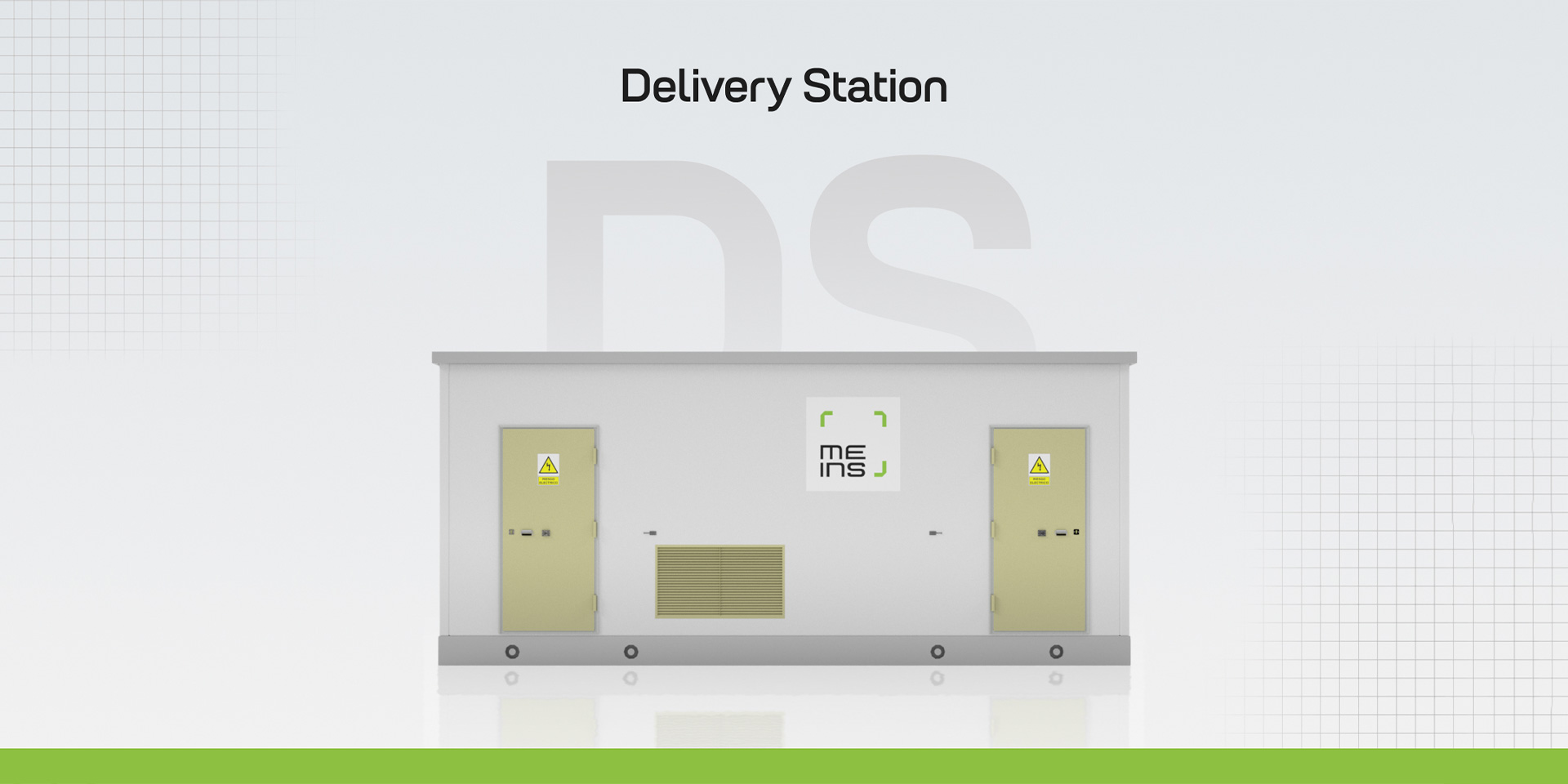
A Delivery station is an electrical installation designed to connect, isolate, and protect different medium-voltage circuits within an energy infrastructure.
Its main function is to ensure safe and flexible grid operation, enabling switching operations, maintenance work, and incident response without affecting the entire installation.
Switching stations are commonly used in:
- Photovoltaic plants.
- Wind farms.
- Battery Energy Storage Systems (BESS).
- Hybridization projects
- Data centers.
- Industrial facilities.
- Hybrid generation and energy storage projects.
The Evolution Towards Prefabricated Solutions
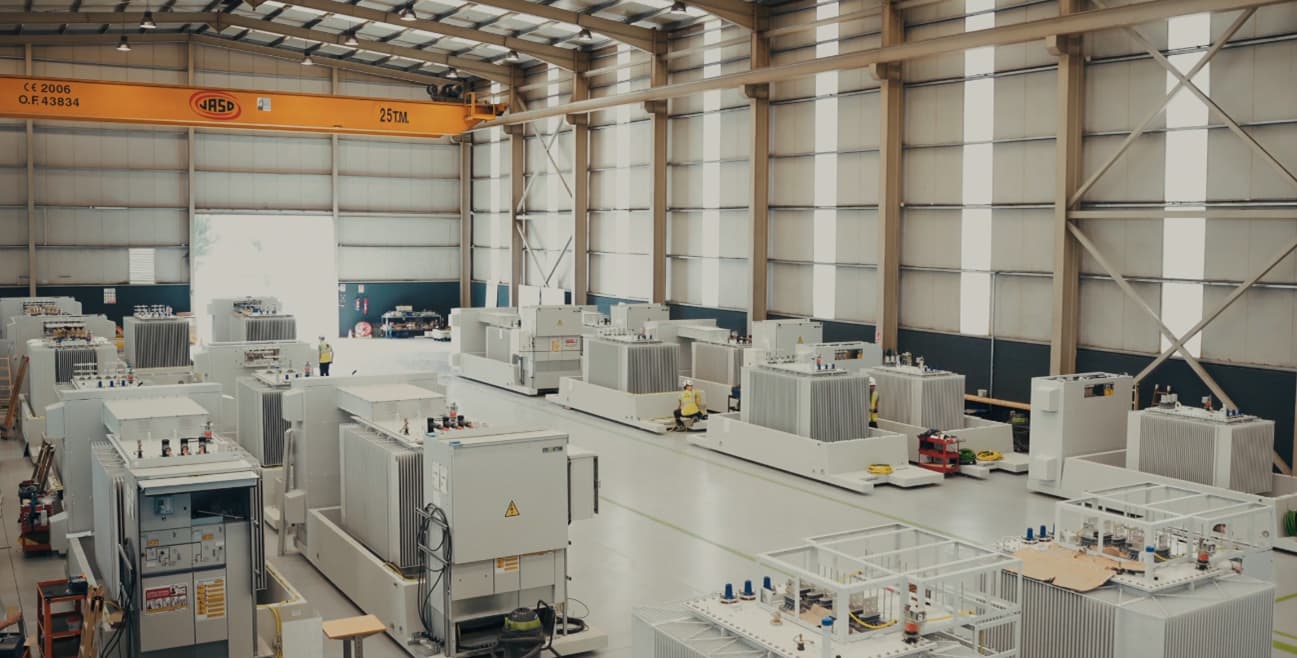
Traditionally, delivery stations required significant civil works and on-site assembly. However, the need to reduce lead times and minimize risks has driven the development of prefabricated and Plug & Play solutions.
Manufacturing and integrating the equipment in a controlled environment improves quality, simplifies installation, and accelerates commissioning.
| Aspect | Traditional Solution | Prefabricated Solution |
|---|---|---|
| Installation | Civil Works | Faster |
| Quality | Project-based | Reduced |
| Lead times | Longer | Shorter |
| Execution risk | Higher | Lower |
| Quality-control | Field-dependent | Factory-controlled |
Meins Delivery Station: A Plug & Play Solution for Medium Voltage
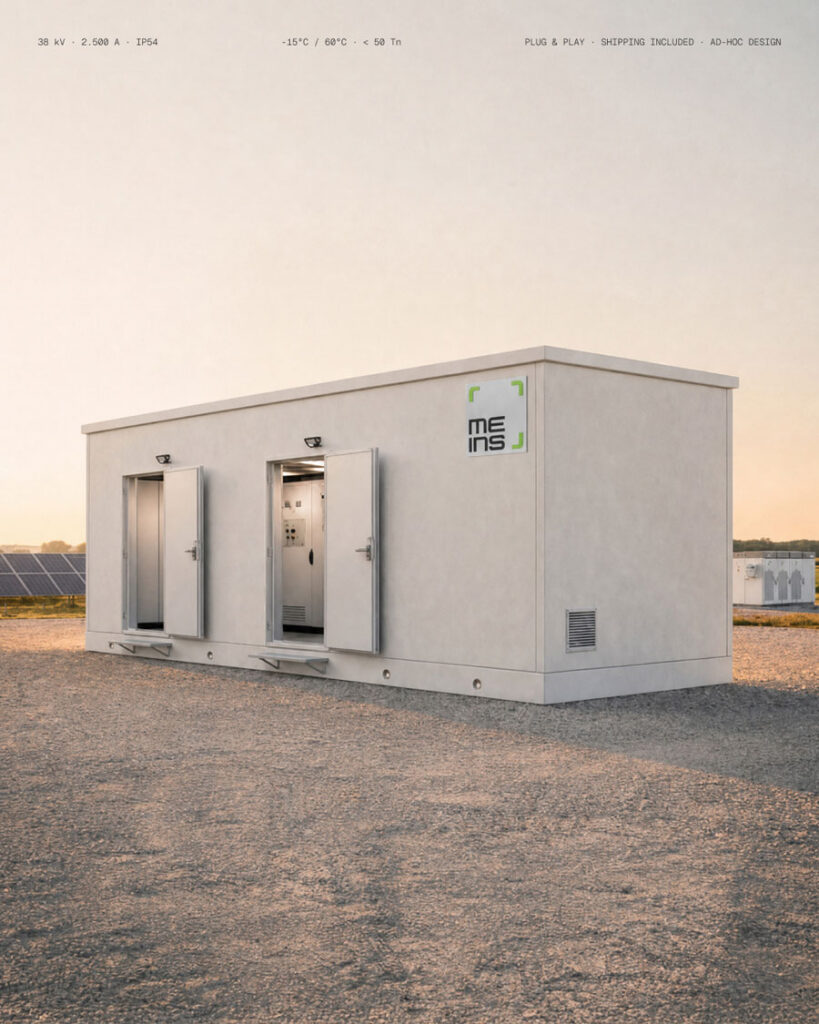
Meins Delivery Station – Full Indoor is a prefabricated switching station designed to simplify the connection and management of medium-voltage circuits in energy projects.
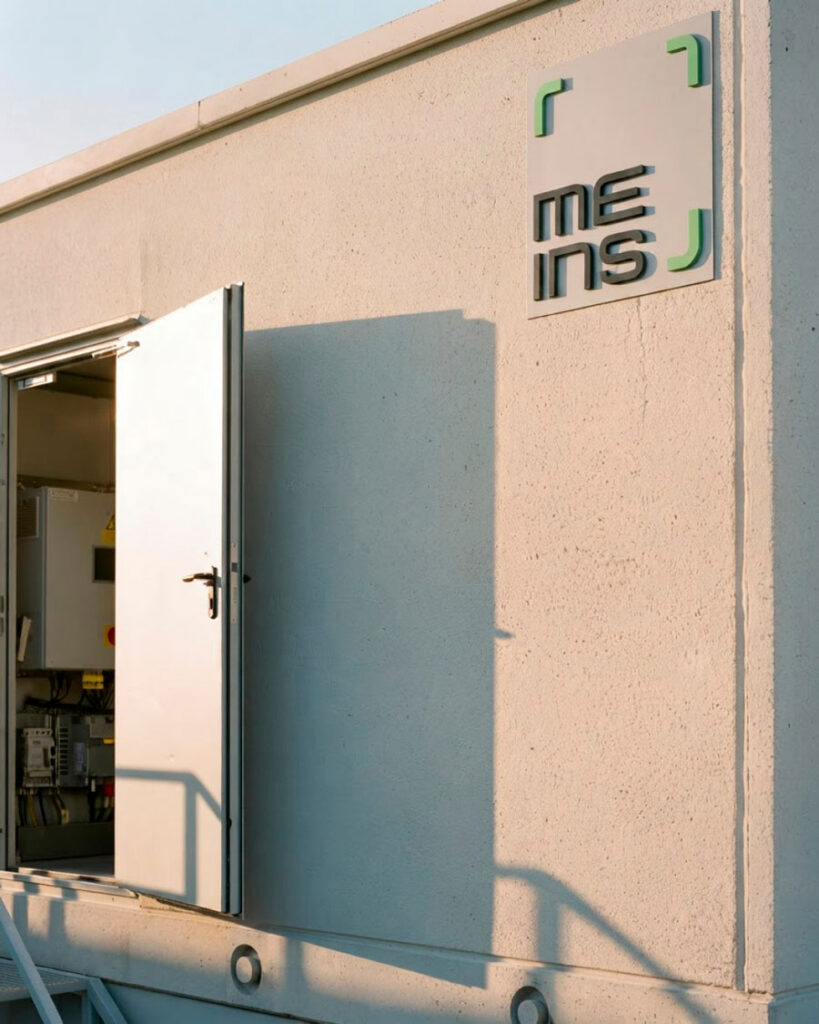
The solution integrates the main equipment required for its operation within a single concrete building, ncluding:
- Medium-voltage switchgear.
- Auxiliary services transformer.
- Auxiliary panels.
- UPS systems.
- Communication and remote control systems.
- Protection and safety systems.
Thanks to its modular and customizable design, it can be adapted to photovoltaic plants, BESS installations, wind farms, hybrid projects, data centers, and industrial infrastructure
Up to 52 MVA | 5,000 A | 40 kA/3s
These ratings position the Delivery Station as a solution designed to concentrate circuits from large-scale power plants, providing sufficient short-circuit capacity to meet the demanding requirements of utility-scale projects.
Conclusion
Delivery stations are an essential component for ensuring the safety, flexibility, and reliability of medium-voltage networks. The adoption of prefabricated solutions such as the Meins Delivery Station helps reduce execution times, simplify installation, and improve quality control, providing an efficient alternative for today’s energy projects.
FAQ (Frequently Asqued Questions)
What is an electrical delivery station?
It is a medium-voltage installation that allows different electrical circuits to be safely connected, protected, and isolated.
Where are delivery stations used?
They are commonly used in photovoltaic plants, wind farms, BESS systems, data centers, and industrial facilities.
What are the advantages of a prefabricated Delivery Station – Full Indoor?
It reduces installation times, improves quality control, minimizes on-site risks, and simplifies commissioning.
Why are switching stations important for renewable energy projects?
Because they enable the safe management of generated energy, facilitating grid connection and improving the overall reliability of the installation.