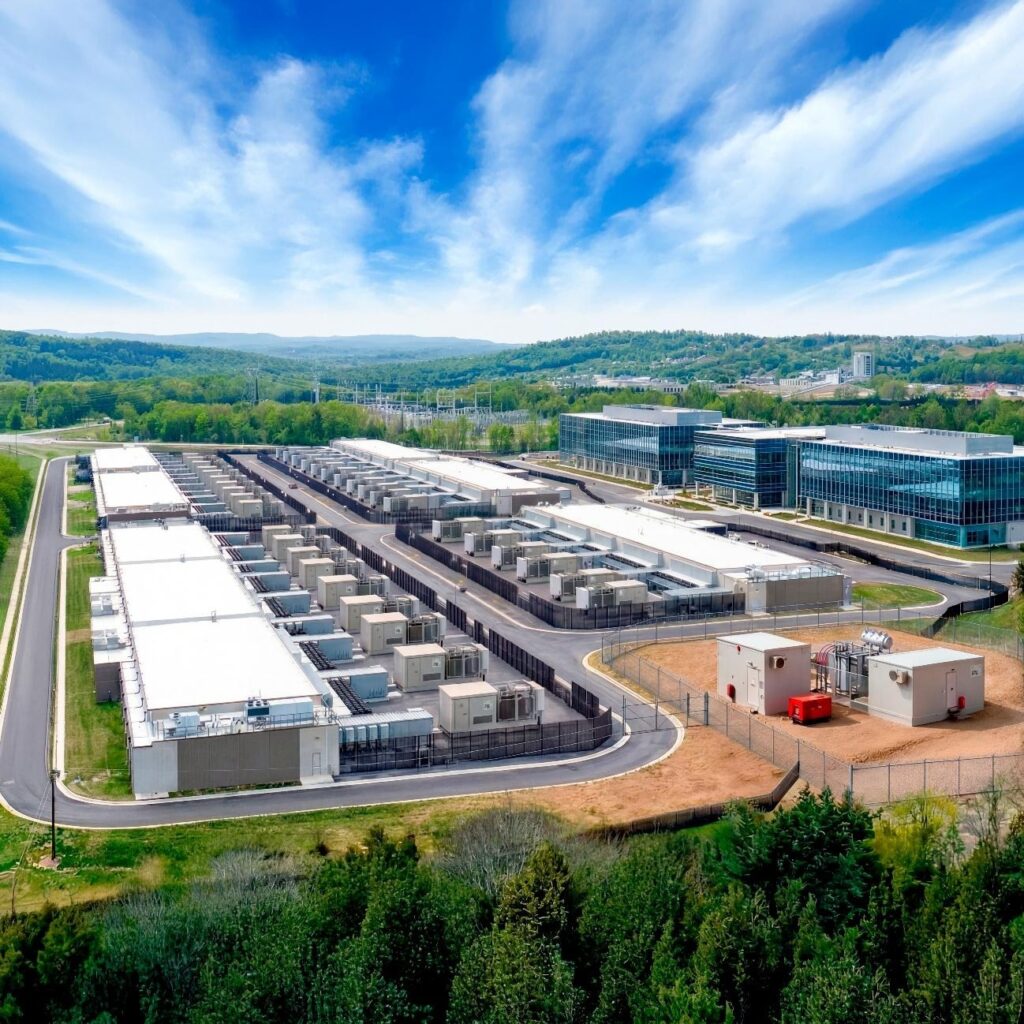
The growth of data centers is driving unprecedented demand for energy. These facilities require a continuous and highly reliable power supply, as any interruption can result in data loss, downtime, and significant financial costs.
Electrical design has become a critical factor in competitiveness for hyperscale projects. hyperscale.
Ensuring this continuity depends not only on the available power, but also on how the electrical infrastructure is designed and implemented. In this context, the shift toward solutions modular, prefabricated, and factory-built is making a difference in terms of delivery times, costs, reliability, and scalability.
What is a data center’s electrical infrastructure, and why is it critical?
A data center requires an electrical infrastructure capable of operating without interruptions and adapting to highly critical environments.
To do this, the system must meet three fundamental requirements:
- Uninterrupted supply
- Redundancy at all electrical levels
- Ability to respond to failures or incidents
This translates into architectures where power supply is organized through multiple channels: ranging from redundancies in the connection to the medium- and high-voltage distribution or transmission grid, to auxiliary sources such as diesel or gas generators, and increasingly incorporating hybrid systems that combine renewable generation with battery storage, thereby ensuring service continuity in the event of any contingency.
In addition, the current design must take into account not only the operation, but also the future scalability, allowing for phased growth without redesigning the infrastructure.
Medium- and high-voltage electrical systems for data centers
The medium- and high-voltage network serves as the backbone of the data center’s power distribution system under normal operating conditions.
It works by:
- One or more network connection points
- Automatic switching systems
- Protections capable of responding in milliseconds
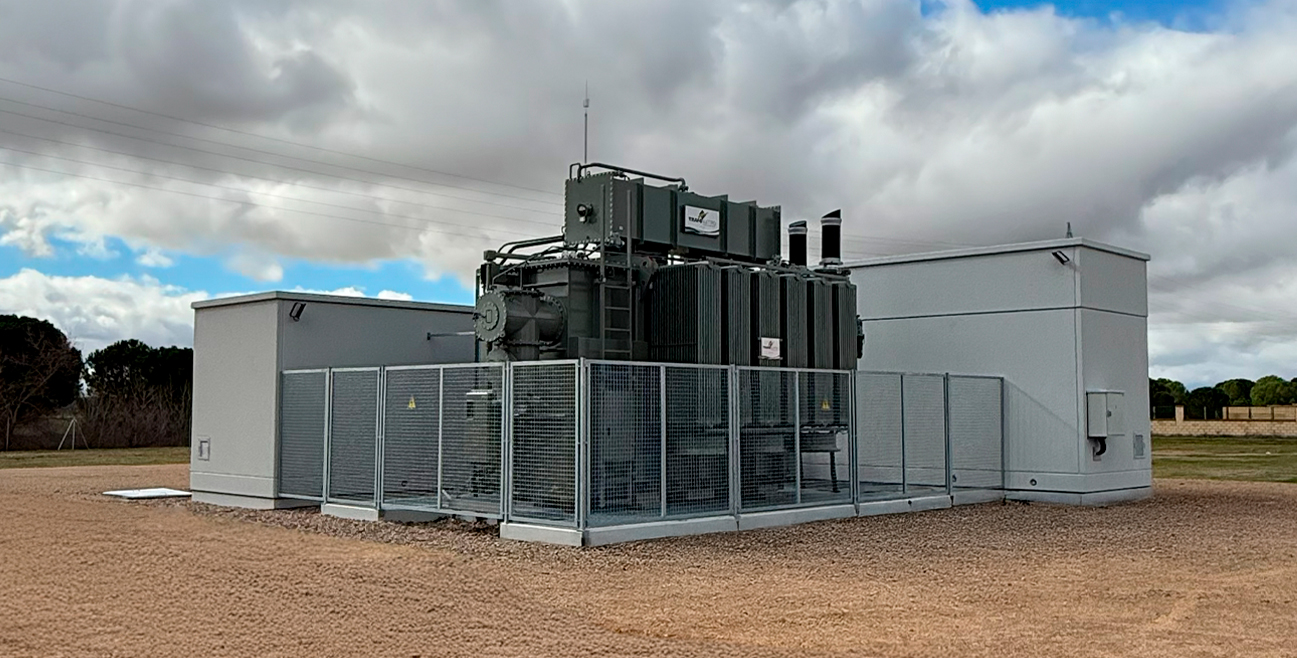
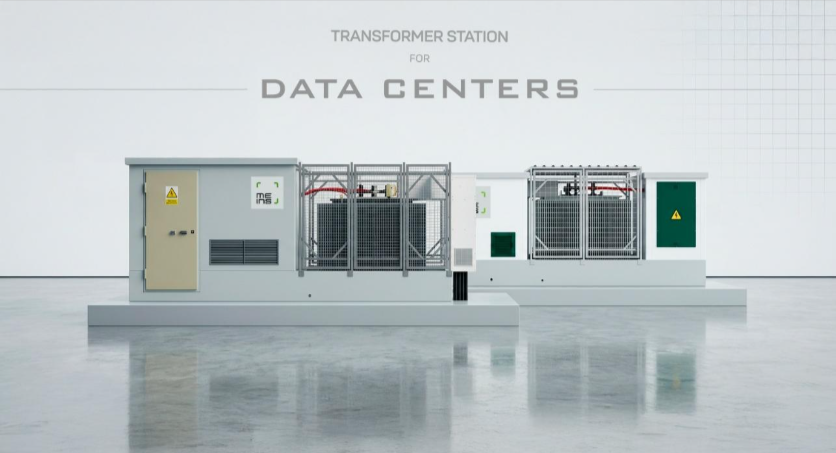
Transformer stations and substations enable the transformation of electrical energy by adjusting its voltage to the operating ranges of IT equipment and distributing it safely within the facility.
In addition, they include:
- Medium- and high-voltage switchgear
- Power transformers
- Advanced protection systems
- Sensors and automation systems
- Auxiliary systems
In the most advanced designs, these systems are digitized and networked, which means that cybersecurity standards (ISO 27001) must be incorporated into their design, particularly in environments that use SCADA, BMS, or remote monitoring.
Transformer stations and substations: impact on CAPEX and IT space
Not only do they convert energy, but they also serve as key elements of stability, protection, and continuity.
Their responsibilities include:
- Isolate the data center from network disruptions
- Ensure safe distribution
- Ensure service continuity in the event of failures
In addition, in current models, their design has a direct impact on:
- Land use
- Installed IT capacity
- The total CAPEX for the project
Compact, outdoor solutions help reduce the footprint, freeing up space for greater IT capacity compared to traditional designs based on on-site buildings.
This allows for an increase in installed IT capacity per unit of floor space, which is critical in environments where floor space is a limited resource
Why doesn’t the traditional model work in data centers anymore?
Electrical design must address multiple challenges simultaneously:
- Energy availability and grid access
- Complexity in system coordination
- Shorter turnaround times
- Shortage of skilled labor on construction sites
- Minimizing Interference Between Disciplines
In this context, the traditional model has clear limitations.
Consequently, the trend is toward the industrialization of the construction process, in which:
- The electrical infrastructure is being installed alongside the construction work
- Interference between activities is reduced
- Reliance on specialized field personnel is minimized
This allows for a significant reduction in the timeline and greater certainty in implementation.
Prefabricated modular solutions: the new standard in data centers
Meins develops solutions designed for critical environments, based on modularity, prefabrication, and high integration.
- CSET (Compact Substation): A prefabricated compact substation that integrates medium- and high-voltage equipment into a single system.
- It optimizes available space by approximately 10 times compared to traditional AIS designs
- Quick installation on-site, taking less than 14 days
- Reduction of visual and environmental impact
- Simplifying the process of obtaining administrative permits
- Enables scalable, phased deployments
- FSET (Fusion Substation): An integrated solution that combines a substation and a transformer station into a single unit.
It allows for a transition from traditional configurations: 45/20 kV + 20/0.4 kV
To a simplified model: 45/0.4 kV
- Elimination of intermediate levels
- Equipment reduction
- Less operational complexity
- Significant impact on OPEX and simplification of the data center’s electrical architecture
This is particularly important for small- and medium-scale projects (5–30 MW), where operational optimization is key.
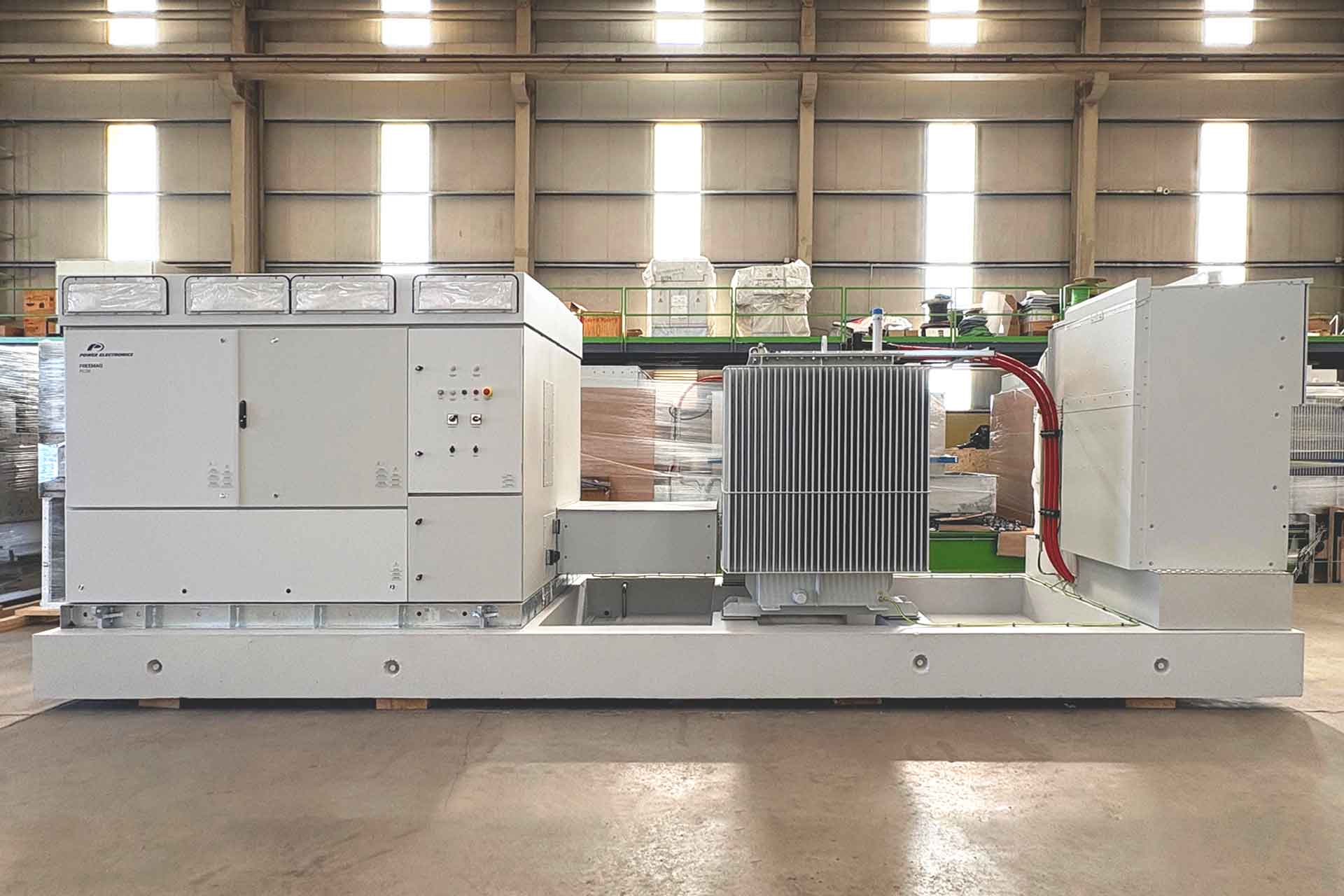
- DCPS (Data Center Power Station): A plug-and-play power distribution unit designed specifically for data centers:
- Quick integration
- Modular architecture
- Designed for critical environments
These solutions allow you to:
- Decoupling construction from electricity supply
- Reducing interference on-site
- Optimize land use
- Speed up the rollout
Why do off-the-shelf solutions improve reliability?
Prefabrication represents a paradigm shift in the construction of electrical infrastructure.
Its main advantages are:
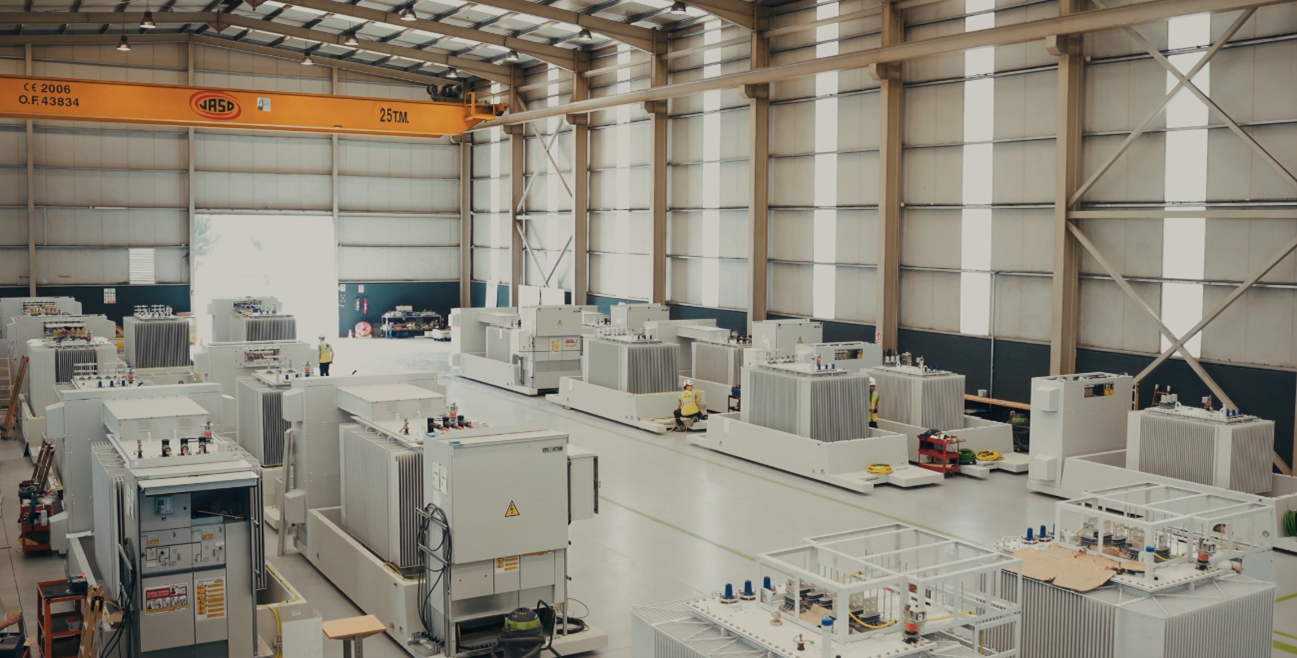
- Manufacturing in a controlled environment
- Highly standardized systems
- Full or partial factory acceptance testing (FAT)
- Reduction in fieldwork
This translates to:
- Shorter commissioning times (SAT)
- Reduction in rework
- Higher quality and greater consistency
- Lower risk of delays
In addition, standardization facilitates the integration of cybersecurity measures aligned with standards such as ISO 27001, extending security from the IT environment to critical electrical infrastructure.
Impact on CAPEX, OPEX, and the Financial Model.
The impact goes beyond the initial cost.
- CAPEX
- Reduction in civil engineering work
- Demolition of electrical buildings
- Lower land use
- Optimization of land use
- OPEX
- Less operational complexity
- Greater accessibility
- Fewer components → greater reliability
- Reduced maintenance
- Financial model
- Delivery aligned with the final phases of the project
- Lower upfront CAPEX
- Improved cash flow
Cybersecurity in Data Center Electrical Infrastructure: An Emerging Critical Factor
Cybersecurity is no longer limited to the IT environment; it has become a key component of the electrical infrastructure in data centers.
The growing digitization of electrical systems—through the integration of technologies such as SCADA, BMS, and remote monitoring—improves operational efficiency, but it also introduces new risks that can directly impact power supply continuity.
Why is the electrical infrastructure vulnerable?
The shift toward connected environments has eliminated the traditional isolation of OT (Operational Technology) systems, creating new vectors of exposure:
- Integration between IT and OT systems
- Remote access for operation and maintenance
- Cloud-based real-time monitoring
- Automation and Digital Control
In this context, a breach can affect not only the data but also the data center’s electrical operations.
Key Risks in Critical Electrical Systems
Among the most significant risks are:
- Unauthorized access to control systems (SCADA)
- Tampering with electrical safety devices
- Interruption of switching systems
- Changes to operating parameters
- Attacks on monitoring systems
In high-stakes environments, these events can lead to service outages or even equipment damage.
Cybersecurity by Design: A New Requirement
The industry is moving toward integrating cybersecurity criteria from the early stages of a project, relying on standards such as:
- ISO 27001
- IEC 62443
- Directive NIS2
This enables the design of more secure architectures, with network segmentation and access control at the source.
Impact on business continuity
In a data center, the cybersecurity of the electrical infrastructure is directly linked to service availability.
An incident can result in:
- Unplanned stops
- SLA Violation
- Reputational impact
- Contractual penalties
For this reason, security is no longer an optional feature, but a design requirement.
MEINS Approach
MEINS integrates cybersecurity into the design of its electrical solutions for critical environments, taking into account:
- Architectures that comply with international standards
- Segmented and secure control systems
- Preparing for digitized and connected environments
This approach not only ensures a reliable power supply but also enhances resilience against digital threats.
Conclusion
Electrical infrastructure is no longer merely a supporting element in a data center, but a critical factor in competitiveness.
Operators who adopt modular, prefabricated, and scalable models will be able to:
- reduce execution risks
- speed up the start-up
- maximize return on assets
In this context, electrical engineering is no longer merely an operational discipline but has become a strategic advantage.
Frequently Asked Questions (FAQ) About Electrical Infrastructure in Data Centers
What is the electrical infrastructure of a data center?
A data center’s electrical infrastructure consists of the medium- and high-voltage, power transformation, backup, and distribution systems that ensure a continuous, safe, and uninterrupted power supply to IT equipment.
This includes substations, transformer stations, switching systems, UPS systems, generator sets, and control systems.
What does N+1 or 2N redundancy mean in a data center?
Redundancy refers to a system’s ability to continue operating in the event of failures.
- N+1: There is at least one additional backup component
- 2N: complete duplication of the electrical system
- 2N+1: dual system plus additional redundancy
These configurations ensure high availability and service continuity.
What is the difference between a Tier III and a Tier IV data center?
Tier levels define the degree of reliability:
- Tier III: Concurrent maintenance, availability ≈ 99.982%
- Tier IV: fault-tolerant, availability ≈ 99.995%
The main difference lies in the level of redundancy and the ability to continue operating without interruption in the event of an incident.
What voltage is used in a data center?
It depends on the size of the project, but typically:
- Medium voltage: 20 kV – 45 kV
- Low voltage: 400 V
In some advanced designs, transformation levels are optimized to reduce losses and simplify the architecture.
What is the role of a transformer substation in a data center?
The substation steps down the electrical voltage from medium voltage to levels suitable for IT systems.
In addition, it performs key functions:
- Electrical protection
- Internal distribution
- Protection against power grid disturbances
It is a critical factor for the stability and continuity of the supply.
What is the difference between AIS and GIS substations?
- AIS (Air-Insulated Substation): air insulation, larger size, lower initial cost
- GIS (Gas-Insulated Substation): gas insulation, compact design, greater reliability in critical environments
In data centers, compact GIS-type or hybrid solutions help optimize floor space.
What are the advantages of prefabricated substations in data centers?
Prefabricated solutions allow you to:
- Shorter turnaround times
- Manufacturing in a controlled environment
- Less reliance on civil engineering work
- Higher quality and greater consistency
- Phased scalability
This makes them the current standard for high-stakes projects.
How does electrical infrastructure affect CAPEX and OPEX?
CAPEX:
- Reduction in civil engineering work
- Lower land use
- Demolition of electrical buildings
OPEX:
- Less operational complexity
- Reduced maintenance
- Greater reliability
In addition, it has a direct impact on the project’s financial model.
What is a BESS system, and how is it integrated into a data center?
A BESS (Battery Energy Storage System) is a battery storage system that enables:
- Increasing energy resilience
- Reduce reliance on diesel generators
- Integrating renewable energy
In data centers, it is used as a supplement to UPS systems and backup systems.
Why is modularity key in data centers?
Modularity allows for:
- Scale up in phases based on demand
- Reduce the initial investment
- Speed up deployments
- Minimizing Risks in Construction
This is a key approach in hyperscale and edge projects.
What role does cybersecurity play in the electrical grid?
The digitization of electrical systems (SCADA, BMS) introduces risks that must be managed from the design phase onward.
Cybersecurity enables:
- Protecting control systems
- Prevent unauthorized access
- Ensure business continuity
Standards such as ISO 27001 and IEC 62443 are key in this area.
What factors influence the electrical design of a data center?
The main factors are:
- Required power (MW)
- Redundancy level (N+1, 2N)
- Network availability
- Available space
- Deployment time
- Regulatory requirements
Every project requires engineering tailored to its specific needs.