Energy storage using Battery Energy Storage Systems (BESS) has become one of the key pillars of the energy transition. The accelerated growth of energy storage is transforming electrical grid planning in Europe and Latin America.
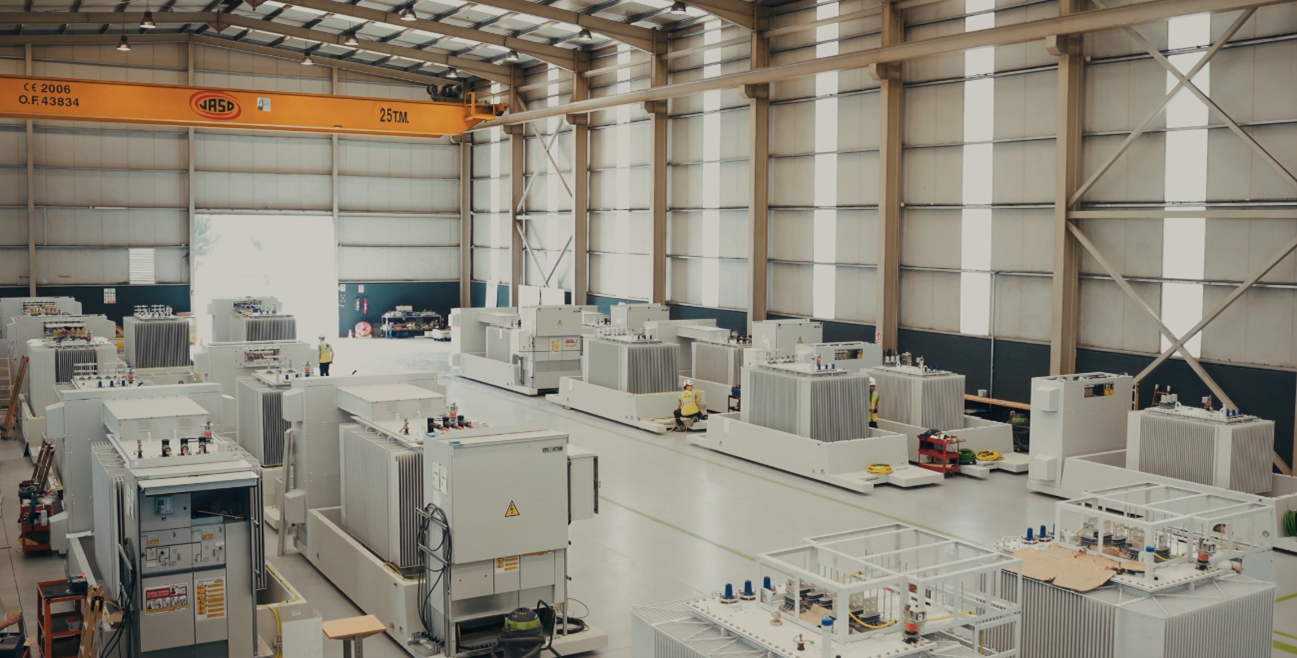
In this context, at Meins we develop Battery Power Stations (BPS), a solution designed to integrate BESS as a modular solution for utility-scale BESS integration. With over 11 GW installed and more than 28 years of experience in international electrical infrastructures, the company applies an approach oriented toward bankability and scalability.
This article analyzes the technical challenges of BESS infrastructure and how our custom (ad hoc) solutions enable the development of competitive projects aligned with European funding programs such as the ERDF (FEDER).
The Importance of Energy Storage
BESS systems allow energy to be stored during times of excess generation and released when demand requires it, providing flexibility, security, and efficiency to the electrical grid. However, their proper operation depends on a custom-designed electrical infrastructure capable of ensuring long-term scalability, safety, and efficiency, especially in utility-scale projects.
Technical Challenges in BESS Integration and the Ad Hoc Approach
Each BESS project presents specific challenges that go beyond simply connecting batteries to the grid. The main challenges include:
- Compatibility with different PCS (Power Conversion System) architectures
- Scalability in power and voltage levels
- Electrical safety and asset protection
- CAPEX optimization and OPEX reduction without compromising reliability
- Compliance with European regulations and grid operator requirements
- Minimization of manufacturing, transport, and installation lead times
To address these complexities, at Meins we are committed to ad hoc solutions, designed specifically for each project and client. This approach allows us to:
- Adapt the power and electrical scheme to actual needs
- Integrate any BESS architecture, from string to central inverters
- Optimize the Balance of System (BOS) by supplying auxiliary electrical components as a “kit”
- Reduce technical and operational risks
This philosophy materializes in our Battery Power Stations (BPS), offering flexibility, reliability, and efficiency in large-scale energy storage projects.
Is an HV/MV Substation Necessary for a BESS?
Not always. A properly designed infrastructure can step up the voltage to 66 kV, avoiding the construction of traditional HV/MV (High Voltage/Medium Voltage) substations in many cases. This implies:
- Reduction of civil works
- Shorter execution time
- Administrative simplification
Battery Power Stations (BPS): An Ad Hoc Approach for BESS Integration
MEINS develops Battery Power Stations (BPS) as a modular and customized solution for the electrical integration of storage systems. Unlike standardized market solutions, a BPS is specifically designed for each project, connection point, and PCS architecture.
BPS Typologies Developed by MEINS
1. BPS-S (String Configuration)
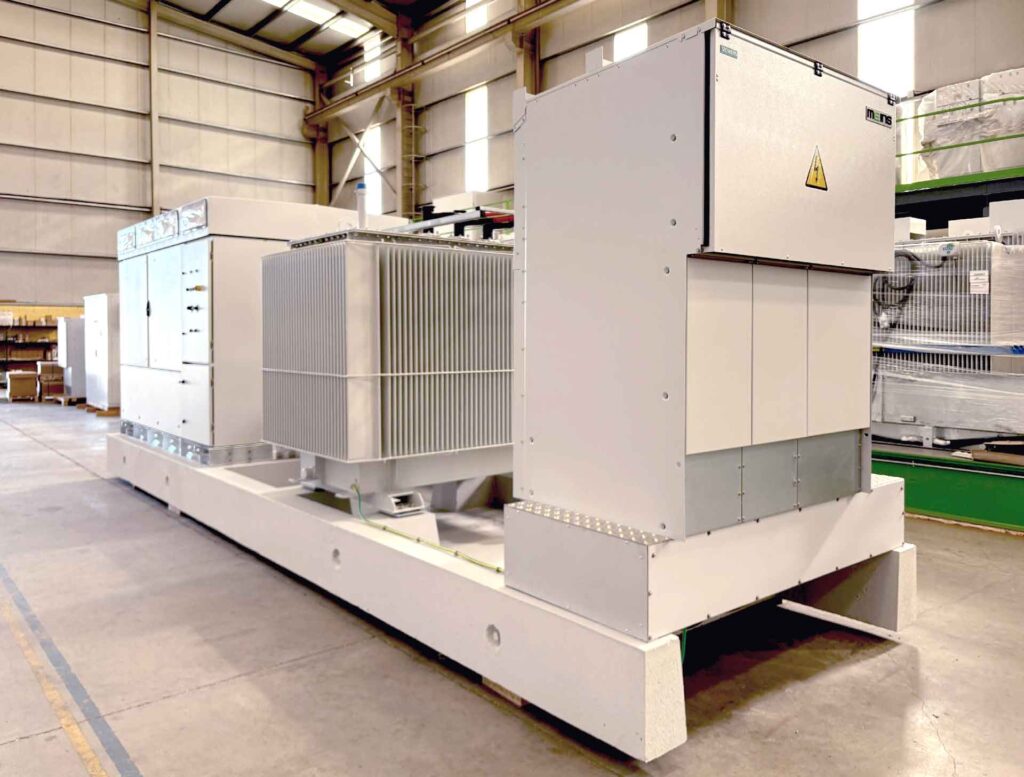
Designed to connect to battery containers with integrated PCS.
- Fully customizable power, up to 11 MW
- Prefabricated concrete platform
- Low Voltage (LV) panel and Medium Voltage (MV) switchgear
- KNAN transformer with oil containment and perimeter fencing
- Ideal for projects requiring modularity, fast installation, and high flexibility.
- Applications: Solutions using Fluence Smartstack, Sungrow Power Titan, Huawei Luna 2000 PCS, etc.
2. BPS-C (Battery Power Station – Central)
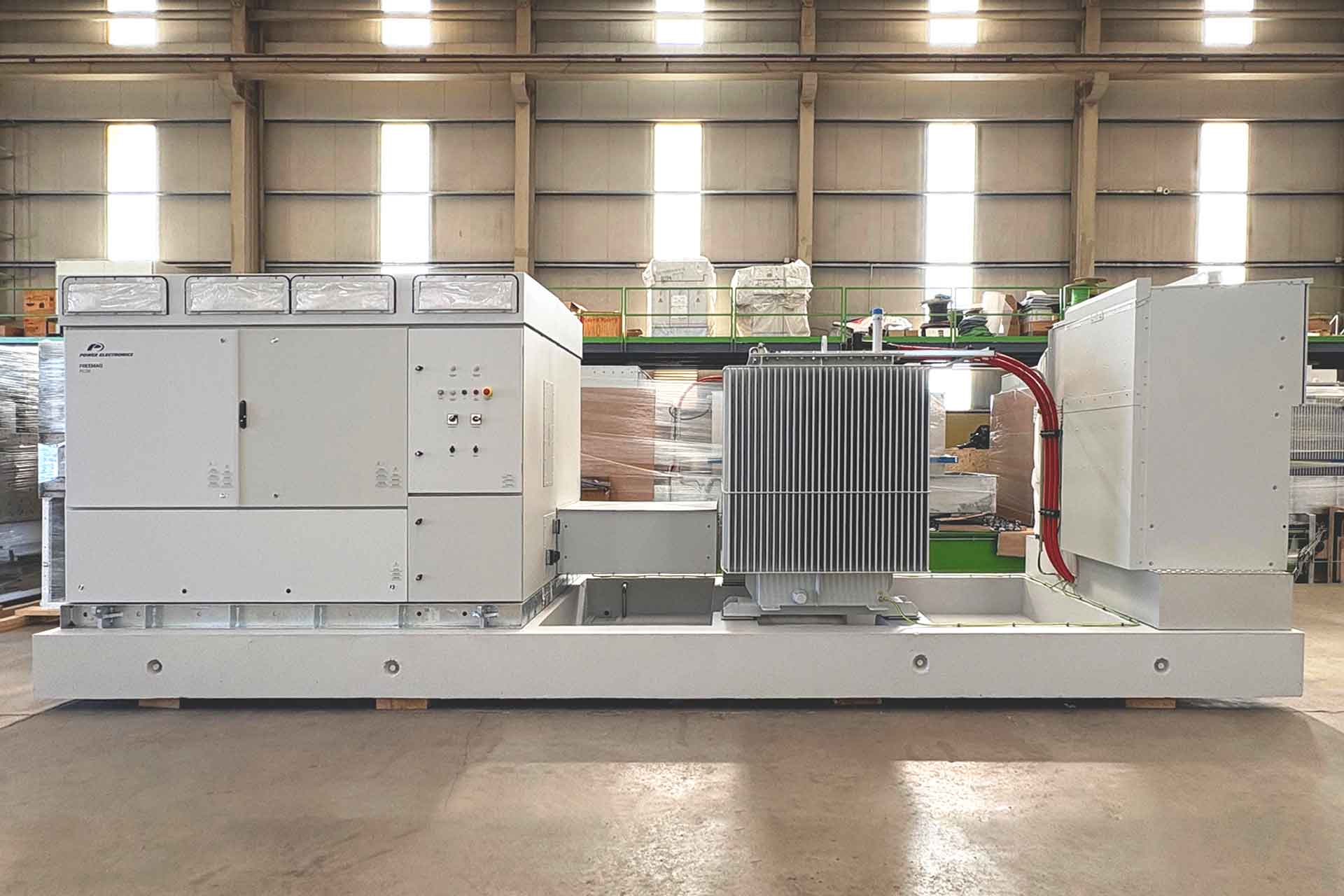
Oriented towards installations with centralized PCS, such as Power Electronics solutions or SMA models.
- Customizable power according to the inverter, up to 8.8 MW
- Prefabricated concrete platform
- Integrated central PCS
- MV switchgear, KNAN transformer with oil containment, and perimeter fencing
- Optimizes electrical integration in larger centralized power projects.
- Applications: Solutions using Power Electronics Freemaq PCSK, SMA Sunny Central Storage PCS, etc.
3. BPS-D (Battery Power Station – Decoupled)
Designed to connect directly to battery containers that already incorporate their own centralized inverter system.
- Direct integration with BESS featuring its own PCS
- Simplification of the electrical infrastructure
- Reduction of installation and commissioning times
- Applications: Solutions using Tesla Megapack PCS, etc.
Distinguishing Features of MEINS BPS
Our BPS solutions stand out for:
- Fully customized design, adapted to each project and client
- Compatibility with any BESS architecture (centralized or string PCS)
- European manufacturing with a certificate of origin
- Auxiliary services transformer integrated into the BPS up to 250 kVA
- Possibility of integrating energy metering at LV and MV levels
- Voltage scalability up to 66 kV, avoiding traditional HV/MV substations
- Easy transport via standard truck or Open Top (OT) container
All of this translates into a significant reduction in CAPEX and even greater savings in OPEX throughout the project’s life cycle.
BPS and European Funding
Because MEINS BPS are manufactured in Europe, they meet the necessary requirements to apply for funding programs such as the ERDF (FEDER) in Spain. This makes our solutions a strategic option for promoters and developers seeking to maximize the economic viability of their BESS projects.
Technical FAQ Section
What is a Battery Power Station (BPS)?
A BPS is a modular solution that integrates transformation, protection, metering, and auxiliary services to connect a BESS system to the electrical grid in a secure, scalable, and optimized manner.
Up to what voltage can a BPS operate?
It can be designed to operate up to 1000 Vac in low voltage, and from 6 kV up to 66 kV in medium/high voltage, depending on the point of connection.
Differences Between an Ad Hoc BPS and Standardized Solutions
An ad hoc BPS is specifically designed for the project, optimizing the BOS, protections, power, and voltage. Standard market solutions have predefined configurations that can limit efficiency and scalability.andard Prefabricated Solutions
Conclusion
The electrical integration of BESS systems is not a secondary component: it is the structural element that determines the safety, scalability, and profitability of a project. An ad hoc design makes it possible to transform a battery system into a robust, bankable energy infrastructure aligned with technical grid requirements.
More info – Contact us here